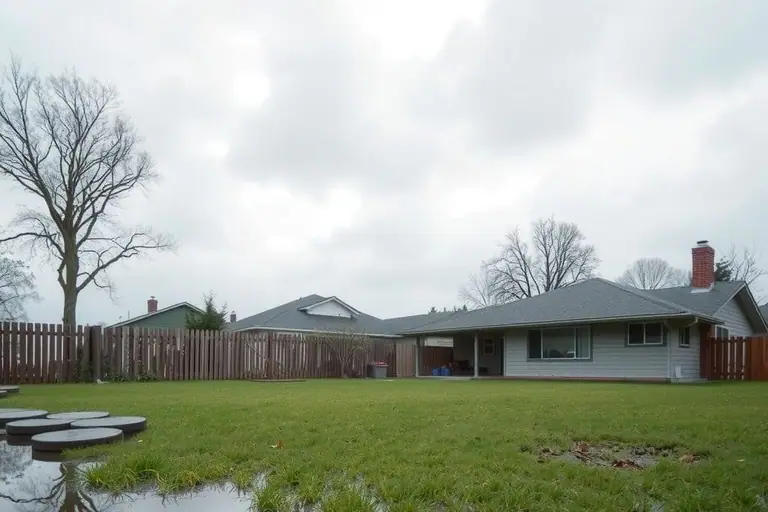
Match what you see to the fix
| What you see | Likely cause | Usual fix |
|---|---|---|
| Puddles in the same lawn spots after every rain | Low spots, compacted soil | Regrade the area or add a catch basin; French drain if the soil stays wet |
| Water against the foundation or in the crawl space | Downspouts and grade sending water to the house | Downspout lines and positive grade first |
| Patio, driveway or garage entry flooding | Hardscape draining toward the house | Catch basin or channel drain to an outlet |
| Water flowing in from uphill or a neighbor's lot | Runoff and shallow groundwater | Swale or interceptor drain across the slope |
| Lawn stays soggy for days, even without puddles | Saturated soil, groundwater, heavy soil | Subsurface (French) drain with an outlet |
| An existing drain area is wet again | Failed French drain | French drain repair |
Grade: the cheapest thing to check
Settled soil, added planters and patios poured at the wrong pitch can all reverse the slope next to a house. Re-establishing positive grade and keeping soil below siding is often part of the fix.
Quick checks before you call
- Watch the yard during a storm and take photos or video of where water flows and collects.
- Walk every downspout: where does each one empty?
- Find any existing drain grates, outlets or cleanouts and check for leaves and soil.
- Note how long puddles last after the rain stops.
- Look uphill: is water coming from a slope, a neighbor's lot or the street?
Those notes and photos make the first conversation with a contractor much faster.
When to call a drainage pro
- Water reaches the foundation, crawl space or garage.
- The same areas flood every winter despite downspout fixes.
- Erosion is cutting into a slope or undermining a patio or path.
- You see cracks in the ground or leaning walls: start with the hillside warning signs guide.
Standing water also gives mosquitoes a place to breed, another reason not to let it sit through the season. When you're ready to hire, use the contractor checklist.
Questions homeowners ask
How do I fix poor drainage in my yard?
Find where the water comes from (roof, uphill, low spots, or groundwater), then fix that source: pipe the downspouts, reshape the grade, add a catch basin, or install a French drain or interceptor drain with a proper outlet.
What can I do to fix my waterlogged backyard?
In the short term, clear any outlets, extend downspouts away from the area and stay off the soaked lawn. For a lasting fix, the table on this page matches what you see to the usual repair.
What are the best drainage options for my backyard?
The cheapest fix that removes the source. Surface water calls for grading, swales, catch basins and downspout lines. Water in the soil calls for subsurface drains. Slopes often need both.