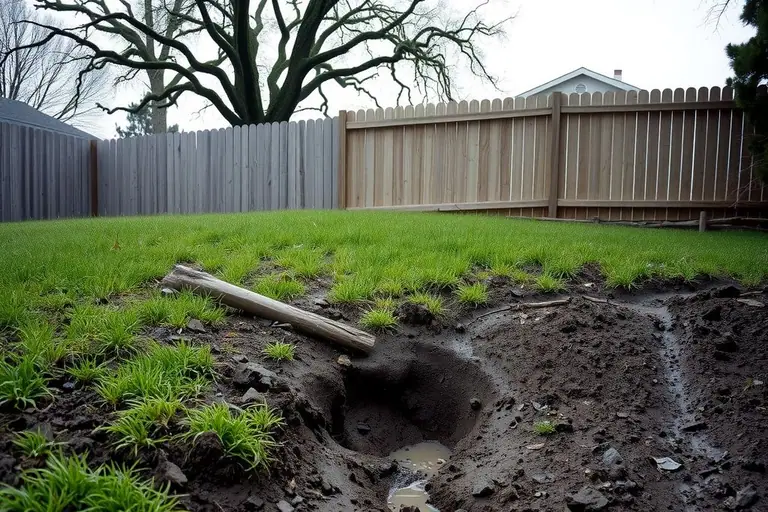
Drainage problem or engineer now?
| Sign | Points to | Next step |
|---|---|---|
| Puddles, soggy lawn, water on a patio | Drainage | Standing water fixes |
| Runoff sheeting down the slope; gullies in bare soil | Drainage and erosion | Swale, interceptor drain, planting |
| Water seeping from a wall or the base of a slope | Drainage (if nothing is moving) | Drainage contractor; engineer if walls show distress |
| Springs, seeps or saturated ground where it is normally dry | Possible movement | Watch closely; engineer if it appears with any sign below |
| New cracks or bulges in the ground, pavement or sidewalk | Ground movement | Geotechnical engineer now |
| Leaning retaining walls, fences, poles or trees | Ground movement | Geotechnical engineer now |
| Doors or windows that stick for the first time | Ground movement | Engineer now |
| Soil pulling away from the foundation; broken buried pipes | Ground movement | Engineer now; utility as needed |
Signs from the USGS landslide preparedness page.
Why storms matter here
USGS research on Contra Costa County found that most damaging landslides between 1950 and 1971 happened on ancient landslide deposits and were triggered by long storms, typically those bringing more than about 7 inches of rain (USGS Bulletin 1388). Long, wet storms saturate the soil; that is when to pay closest attention. To see whether your lot is in a mapped landslide zone, look it up on EQ Zapp.
During a long storm
- Stay alert, especially at night; USGS notes many debris-flow deaths happen while people sleep.
- Keep gutters, grates and outlets clear only if you can reach them safely.
- Listen for unusual sounds such as cracking trees or knocking rocks.
- Watch for a sudden rise or muddying of creek water.
- If you see signs of movement, leave the path of the slope and contact local fire, police or public works.
Who to contact
- Emergency: 911.
- Your city building or public works department, or Contra Costa County for unincorporated Alamo, Blackhawk and Diablo (County permits).
- A geotechnical engineer to assess the slope.
- A drainage contractor to build the water-management part of the engineer's plan, or to fix drainage when the ground isn't moving.
How drainage helps
Keeping roof water, surface runoff and shallow groundwater out of a slope reduces how saturated it gets in storms. It is one part of hillside care, not a guarantee against movement. Options are on the hillside drainage page.
Questions homeowners ask
Is a crack in my hillside a drainage problem or a landslide?
A new crack in soil, pavement or a driveway is a sign of ground movement, not just water. Have a geotechnical engineer look at it before anyone digs or adds water to the slope.
What should I do during a long storm on a hillside lot?
Stay alert, keep gutters, grates and outlets clear if it is safe to reach them, and watch for the warning signs listed here. If you see signs of movement, contact your local fire, police or public works department and get out of the path of the slope (USGS).
Who do I contact about a moving slope?
In an emergency, 911. Otherwise your city building or public works department (or Contra Costa County for unincorporated areas), a geotechnical engineer, and your insurer.