Pros and cons
| Pros | Cons |
|---|---|
| Removes water from saturated soil, which surface fixes can't | Needs a working outlet; without one it just fills up |
| Hidden once the lawn or bed is restored | Trenching disrupts lawns, beds, irrigation and sometimes concrete |
| Can last decades when built with fabric, fall and cleanouts | Can clog with silt or roots, especially without fabric |
| Works with downspout lines and catch basins in one system | Costs more per foot on slopes and tight lots |
How French drains fail
- No outlet or a buried outlet: the most common failure.
- Silt: fine soil migrates into rock that wasn't wrapped in fabric.
- No consistent fall: sags hold water and collect sediment.
- Roots from nearby trees grow into the pipe.
- Surface water sent into it: roof water dumped into a French drain overwhelms it and carries debris in. Roof water belongs in solid pipe.
Repair options are on the French drain repair page.
Alternatives by problem
| Problem | Alternative | Why |
|---|---|---|
| Yard slopes toward the house | Regrading | Fixes the cause; often cheaper than a drain |
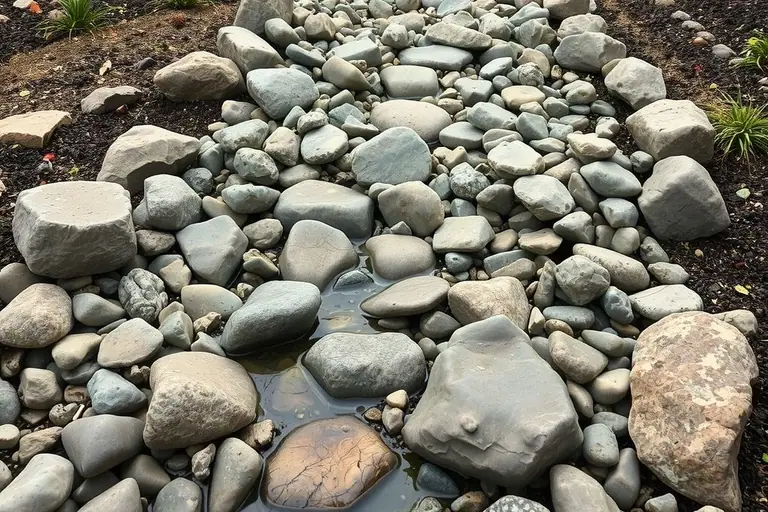
| Surface runoff crossing the yard | Swale or dry creek bed | Carries water on the surface where it is easy to maintain |
| Puddles at one low spot | Catch basin with solid pipe | Collects surface water at the point it gathers |
| Roof water at the foundation | Underground downspout lines | Moves the largest water source away from the house |
| Water coming down a slope | Interceptor drain | A French drain built across the slope, uphill of the problem |
Downspouts and basins: downspout drainage. Slopes: hillside drainage.
When a French drain is the wrong tool
- The water is visible on the surface and moving, not soaking in.
- Downspouts empty next to the foundation.
- There is no downhill route and the soil won't take a dry well.
- The ground is cracking or walls are tilting; that's an engineering question first.
Not sure which applies? The standing water guide matches symptoms to fixes, and a good contractor should explain the source before proposing a drain.
Questions homeowners ask
What are the downsides of a French drain?
Cost and disruption, the need for a real outlet, and clogging over time if fine soil gets into the rock. A French drain also does nothing for water that runs across the surface or is aimed at the house by downspouts.
What can I use instead of a French drain?
Regrading, a swale or dry creek bed, catch basins, downspout lines, or an interceptor drain on a slope. The alternatives table on this page matches each to a problem.
How long does a French drain last?
A well-built drain with filter fabric, consistent fall, cleanouts and a clear outlet can work for decades. Drains without fabric or with a buried outlet can fail within a few winters.